
On June 5, Jiuyue Dai, deputy director of the Beijing bureau of Europe Times, paused in front of a jacquard loom at the Sichuan Silk Museum in Xindu, Chengdu, capturing the intricate process of Shu brocade weaving on camera. “France is home to many luxury brands, but Shu brocade is truly a luxury product of the East,” Dai said. “Its exquisite craftsmanship reflects a distinctly Chinese aesthetic.” She suggested promoting Shu brocade more widely in fashion-oriented countries and cities such as France and Italy.
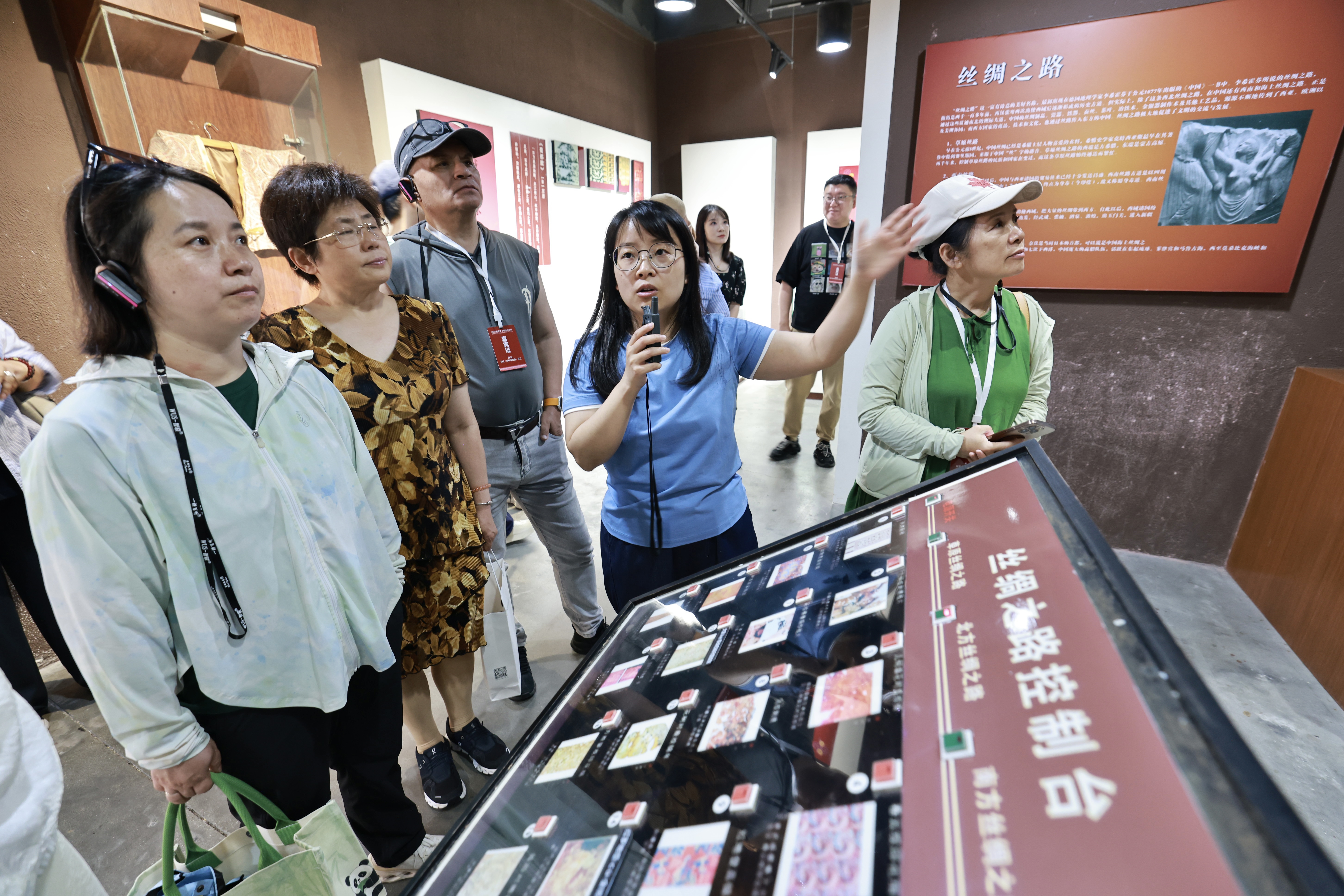
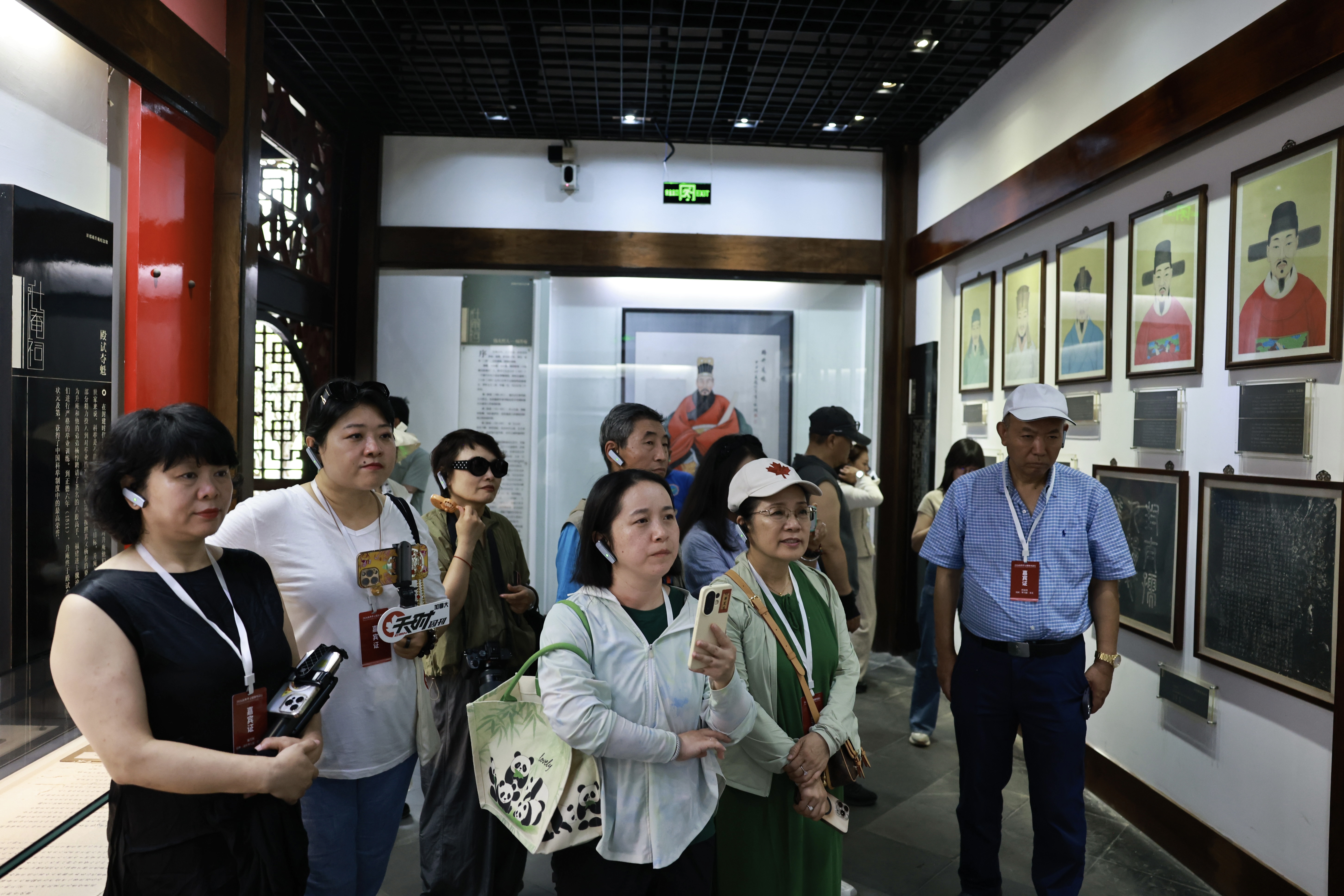
Participants of the “2026 Overseas Chinese Media Tour of Sichuan and Chongqing — Focusing on the Chengdu-Chongqing Twin-City Economic Circle” visited Xindu District in Chengdu. The group explored Jinmen, known as the starting point of the Southern Silk Road, and toured the Yang Sheng’an Memorial Hall and Guihu Lake. Through immersive experiences with Shu brocade and Shu embroidery, they explored a cultural legacy spanning thousands of years while discussing new ways to share Chinese culture with global audiences.
According to the ancient chronicle Chronicles of Huayang, Xindu, together with Chengdu and Guangdu, was once known as one of the “Three Capitals of Ancient Shu.” With nearly 2,800 years of urban history, the area has nurtured a rich cultural legacy—from the ancient Shu people who cultivated mulberry trees and raised silkworms to the renowned Ming Dynasty scholar Yang Sheng’an. Today, Xindu continues to explore innovative ways of sharing traditional culture, serving as a vivid example of China’s cultural outreach to the world.
Located in Xindu, Jinmen is widely regarded as the starting point of the Southern Silk Road. Visitors strolling through this key hub for the Shu brocade and Shu embroidery industries can discover the thousand-year evolution of silk production, from sericulture to textile craftsmanship, at the Sichuan Silk Museum. As early as the Western Han Dynasty, Shu brocade was already traveling along the ancient Silk Road to distant lands.
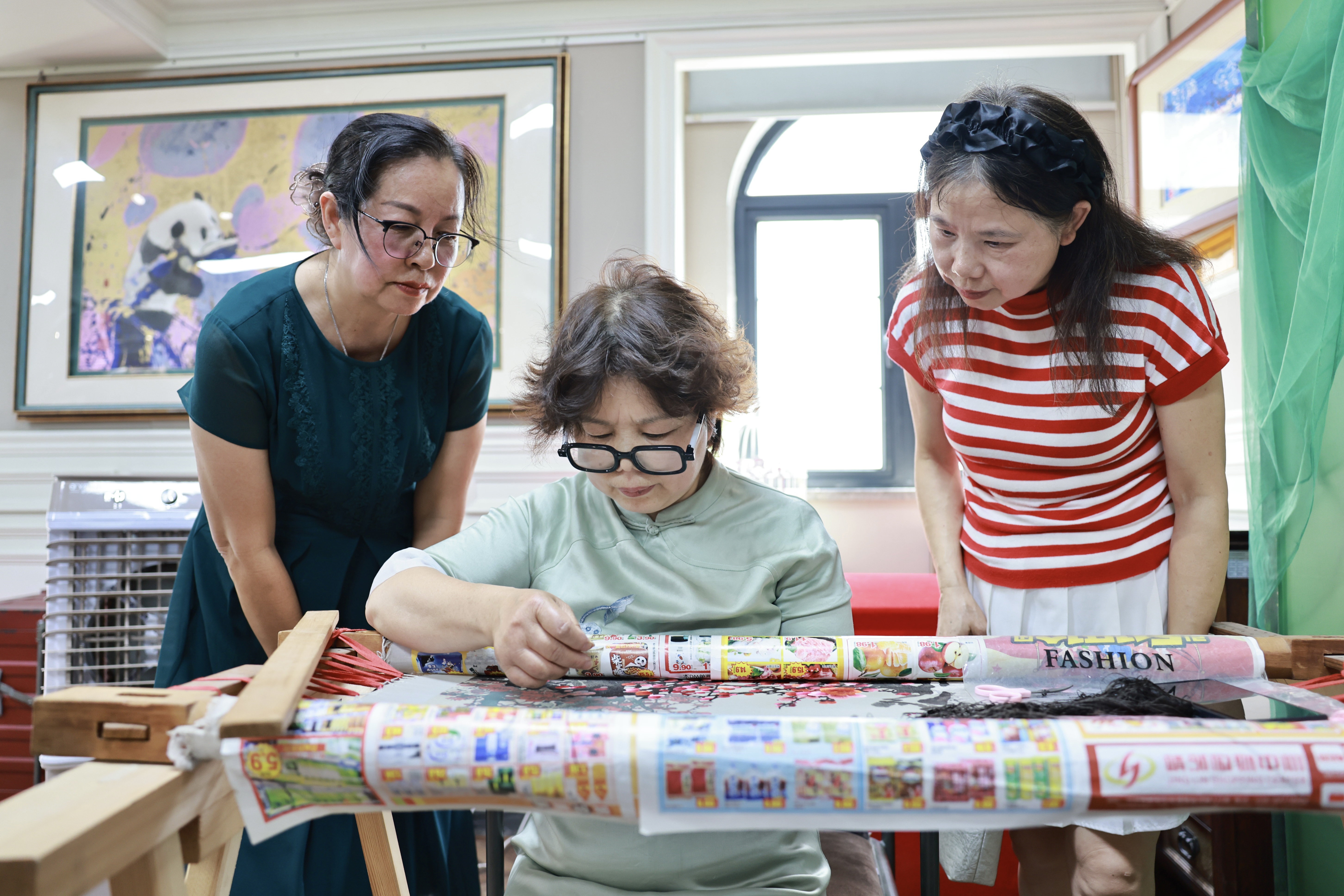
In recent years, Shu brocade has gained growing international attention as a cultural ambassador. According to Wei Liu, head of marketing and operations at Jinmen Scenic Area, the site has introduced more than 100 representative intangible cultural heritage projects, including Shu brocade, Shu embroidery, and Chengdu lacquerware, while attracting over 200 inheritors of traditional crafts. “Jinmen is not only a showcase for intangible cultural heritage, but also a living space where these traditions continue to thrive,” Liu said.
Not far from Jinmen, the blooming lotus flowers at Guihu Lake drew the attention of overseas Chinese media representatives, many of whom stopped to take photographs. Dating back to the Sui and Tang dynasties, Guihu Lake later became associated with Yang Sheng’an, one of the most celebrated literary figures of the Ming Dynasty. He planted osmanthus trees around the lake and composed the poem Song of Guihu Lake: Farewell to Hu Xiaosi, from which the lake derives its name.
During the visit, Xiaoguang Zhang, director of the Social Education Department of the Yang Sheng’an Museum, the visitors learned about Yang Sheng’an’s belief in placing righteousness above personal gain and his family’s “Fourfold Values,” a tradition that produced seven successful imperial scholars as well as prominent statesmen.
This year, Xindu made another significant step in promoting Sheng’an culture internationally with the overseas broadcast of the documentary Yang Sheng’an. “Through Phoenix Television’s global broadcasting network, the documentary has brought Yang Sheng’an and his cultural legacy to audiences around the world,” Zhang said.
For Yuanyuan Shao, editor-in-chief of Brazil Chinese News Network, the documentary offers an accessible gateway for the children of overseas Chinese communities to learn about China’s traditional culture. “The ‘Fourfold Values’ upheld by Yang Sheng’an’s family embody a profound sense of responsibility toward both family and country,” Shao said. “There is much inspiration and spiritual strength that younger generations can draw from this legacy.”
Shao added that Xindu’s rich cultural heritage and forward-looking spirit make it an ideal window for presenting Chinese culture to the world. “Through video reports, I hope to share the traditional culture I encountered in Xindu with Chinese-language schools overseas,” she said. “I also hope more young people from overseas Chinese families will have the opportunity to visit their ancestral homeland and experience their cultural roots firsthand.”