
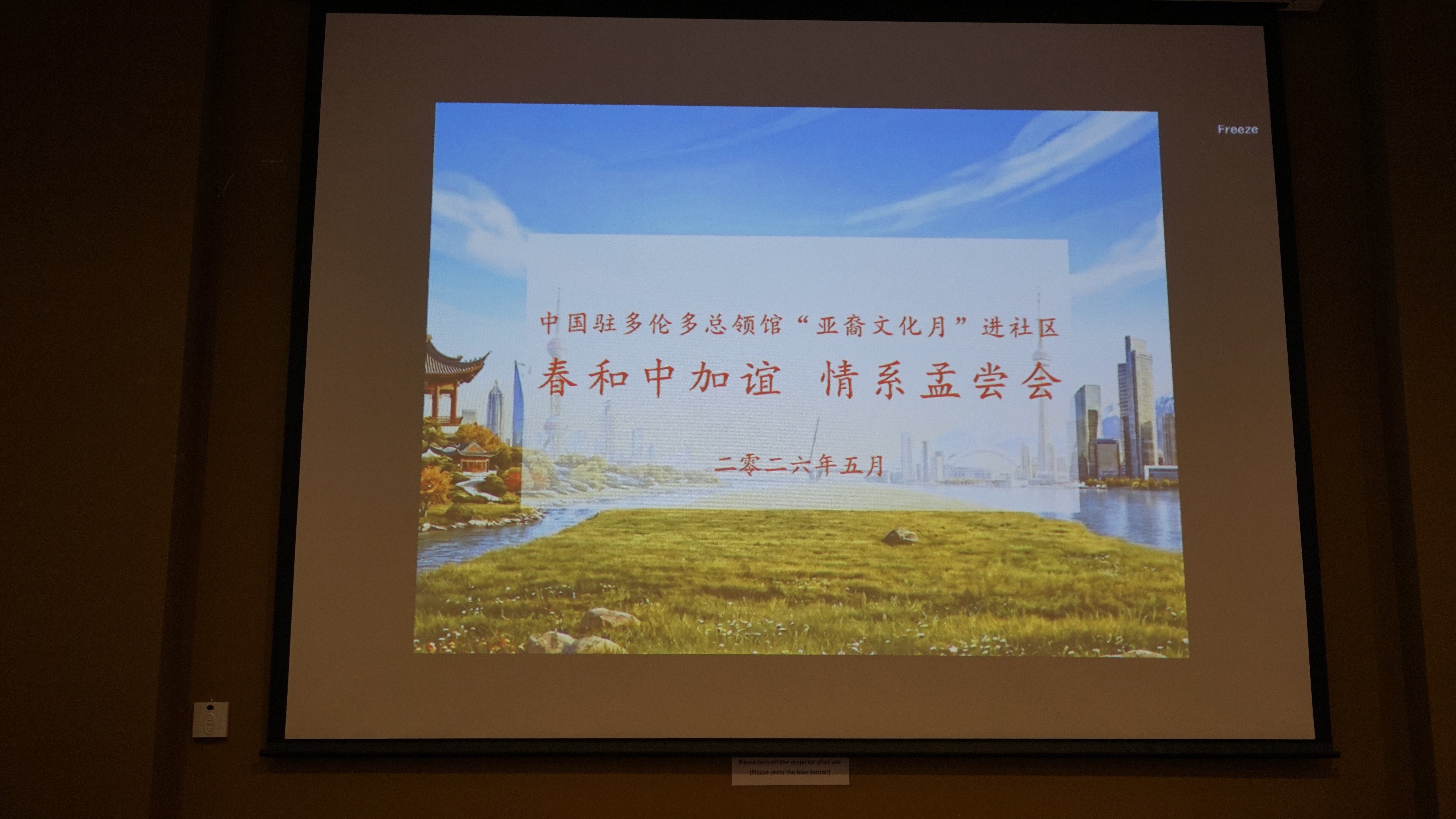
TORONTO, May 8, 2026 – Chinese Consul General in Toronto Luo Weidong and his delegation visited Mon Sheong Court, a senior service facility operated by Mon Sheong in Richmond Hill, on the afternoon of May 7. They met with Chinese community seniors and learned more about the organization’s work in elder care, community services, and cultural companionship. For Chinese seniors and their families across the Greater Toronto Area, language access, cultural fit, passport renewal, visa applications, pension certification, and service coordination after mobility declines are among the more common practical needs in later-life care.

The visit included speeches, cultural performances, interaction with residents, and a tour of the facility. According to the program, performances included traditional instrumental music, magic, Chinese opera, Sichuan opera face-changing, classical dance, children’s choir singing, and Mandarin songs. At the scene, many seniors watched the performances with the support of staff and volunteers, and the atmosphere was warm and festive.


Chinese Consul General in Toronto Luo Weidong extended greetings to the seniors present and expressed appreciation to the Mon Sheong board, staff, and volunteers. In his remarks, he said that Asian Heritage Month is an important time to reflect on the contributions of Asian communities to Canada and to highlight multiculturalism, and that Chinese senior care institutions are also important places for understanding Asian cultural history and community values

The remarks also noted that Mon Sheong, as a charitable organization founded by the local Chinese community, has been rooted in the community for more than 60 years and has developed into a charitable institution that includes long-term care homes, senior apartments, Chinese schools, and community service centres, providing services for Chinese seniors in familiar language and cultural settings.
For many Chinese families, the challenges of caring for elders are not limited to bed availability and costs, but also include daily communication, dietary habits, cultural activities, transportation arrangements, and document-related matters. Some seniors have limited English ability, while their adult children may be unable to accompany them for long periods because of work. In those situations, they often depend more heavily on community organizations that can provide Chinese-language support and cultural understanding.

During the visit, representatives from the consulate also learned more about Mon Sheong Court apartments and related facilities. For seniors who live alone, have mobility challenges, or need regular community support, factors such as whether the living environment is safe, whether staff can communicate clearly, whether activity programming is appropriate, and whether family members can receive timely information all directly affect quality of life.

On consular services for seniors, Luo said the consulate will continue to pay attention to members of the Chinese community in its consular district, especially seniors, and will provide support within its capacity to Chinese charitable senior care organizations including Mon Sheong. He also said consular services will be further optimized to make it easier for seniors to handle passport renewals, visa applications, and pension certification.
As the aging-related needs of the Chinese community continue to grow, the coordination between senior care institutions, community organizations, and consular services affects whether seniors can more easily access daily care, cultural companionship, and document-related support. Families with elderly parents or seniors with reduced mobility should also understand community elder-care resources, service language, admission conditions, activity arrangements, and document service channels in advance, rather than waiting until an urgent need arises.
Held during Asian Heritage Month, the visit and outreach event not only brought performances and greetings to Chinese community seniors, but also renewed attention to the importance of culturally appropriate elder services. As demand for services for Chinese seniors continues to rise, whether smoother coordination can be built among senior care institutions, community organizations, family support networks, and consular services will directly affect the convenience and sense of security of seniors in later life.
(LJI by Yuanyuan)