
TORONTO, October 16, 2026 – The 7th Overseas Chinese New Media Forum was held in Tianjin on October 14, bringing together more than 100 representatives of overseas Chinese-language media, scholars, experts and business leaders from five continents. Participants discussed the development of overseas Chinese-language media, international communication, the global expansion of Chinese companies and international cooperation in vocational education.
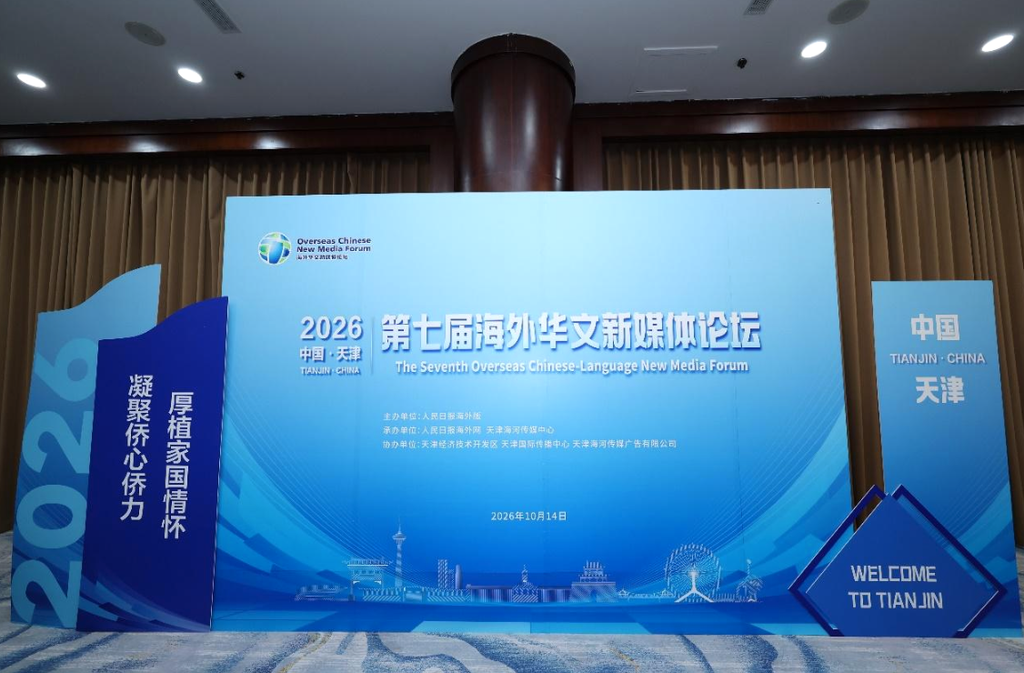
This year’s forum was held under the theme “Uniting the Strength of Overseas Chinese and Deepening Ties with the Homeland.” It was hosted by the Overseas Edition of People’s Daily, organized by Haiwainet and Tianjin Haihe Media Center, and co-organized by the Tianjin Economic-Technological Development Area, Tianjin International Communication Center and Tianjin Haihe Media Advertising Co., Ltd.
Chen Zhi, a member of the Editorial Board of People’s Daily and editor-in-chief of the Overseas Edition, said in his remarks that overseas Chinese-language media have long served as a link between overseas Chinese communities and the societies in which they live. He said they should continue helping connect China with the rest of the world, serve overseas Chinese communities and promote exchanges between civilizations, while strengthening the impact of their content in a changing media environment.
Gao Feng, a member of the Leading Party Members Group and vice-chairman of the All-China Federation of Returned Overseas Chinese, said overseas Chinese-language media and their new media platforms operate across all five continents and have long been rooted in local communities. He said they have distinct advantages in communicating information about China to overseas Chinese communities and broader international audiences, as well as in promoting exchanges between China and other countries.
Gao said he hopes overseas Chinese-language media can further improve the relevance and accessibility of their international communication, making related content easier to understand for audiences from different cultural backgrounds.
Wang Liwen, deputy director of the Publicity Department of the CPC Tianjin Municipal Committee and a senior official with the Tianjin Federation of Social Sciences, introduced Tianjin’s development in areas including ports, technology, industry and urban construction. He said he hopes overseas Chinese-language media can use their connections across countries and regions to help more international audiences learn about Tianjin.
At the opening ceremony, Haiwainet officially launched the Facebook account for “Luban Alumni Community.” Haiwainet General Manager Xu Lei said the platform will further expand the international communication network connected with Luban Workshops. According to the event schedule, the first Luban Workshop Mobile Classroom was held at Tianjin Light Industry Vocational Technical College on October 15.
Haiwainet and Tianjin Haihe Media Center also signed a strategic cooperation agreement to establish a joint international communication practice platform. The two sides plan to cooperate in areas including content and channel sharing, city image promotion, media talent exchanges and training, as well as regional and country studies.
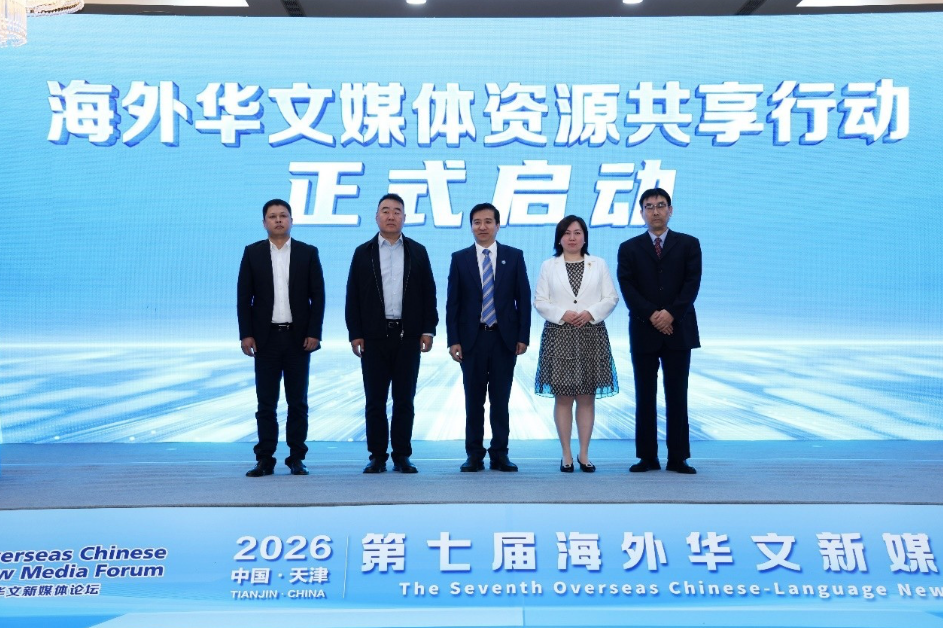
Tianjin Haihe Media Center also launched a resource-sharing initiative with several overseas Chinese-language media organizations, including China Weekly in Egypt, Germany’s Kaiyuan Group, Canada China News and Australia’s Ju’ao Media. The initiative aims to establish a regular cooperation mechanism and provide overseas media with more news, interview and communication resources related to Tianjin.
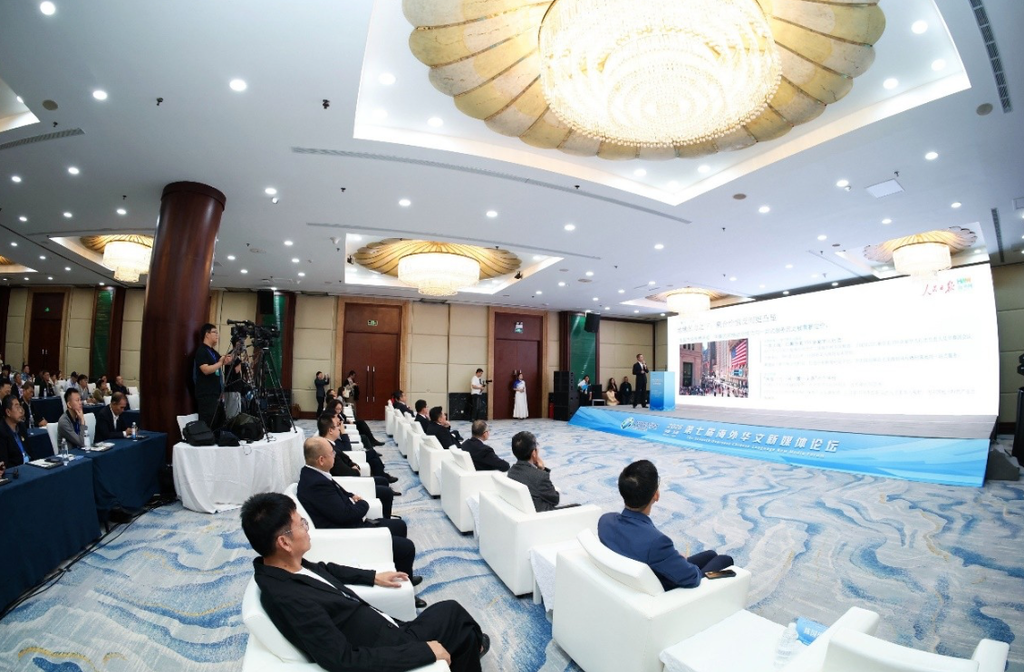
During the main forum, guests discussed the changing role of overseas Chinese-language media, the international expansion of Chinese companies, and how cities and regions can strengthen international communication.
Wu Xinghua, president of China Times in Laos, drew on his experience operating a newspaper locally. He said overseas Chinese-language media have long been rooted in Chinese communities and local society, and that when covering major international cooperation projects, reporting should go beyond macro-level policies and economic figures to include the experiences of ordinary people.
Using the China-Laos Railway as an example, Wu said major cooperation projects can be better understood when audiences see how they affect specific individuals and everyday life.
Shi Jingcai, deputy general manager of Haiwainet, focused on the overseas expansion of Chinese companies. He said China has now established more than 50,000 enterprises overseas across nearly 190 countries and regions, and that Chinese businesses are gradually shifting from simply exporting products to building brands internationally.
As more Chinese companies enter overseas markets, he said brand communication, local engagement and building connections with consumers are also creating new content and cooperation opportunities for overseas Chinese-language media.
Xu Fei, a member of the Party Committee and deputy director of the Administrative Commission of the Tianjin Economic-Technological Development Area, introduced TEDA’s industrial development and international openness. She said the development area currently accounts for about one-seventh of Tianjin’s GDP, one-quarter of its total industrial output, one-third of its imports and exports, and one-sixth of its foreign investment.
Xu said she hopes overseas media can gain a deeper understanding of the area’s manufacturing sector, technology companies and international cooperation opportunities.
Two sub-forums were also held that afternoon.
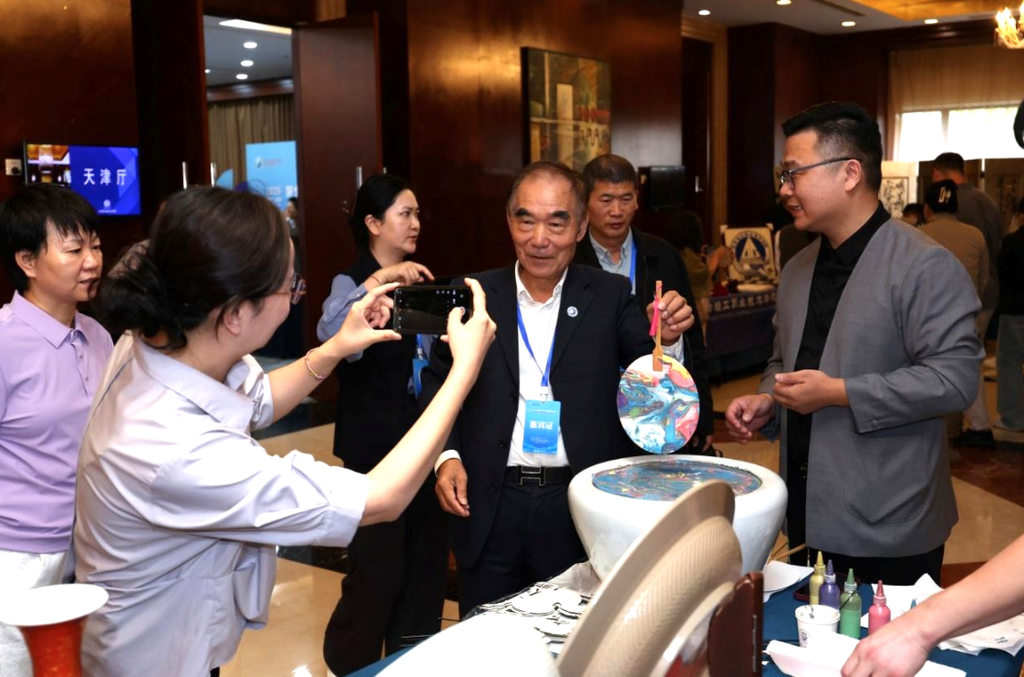
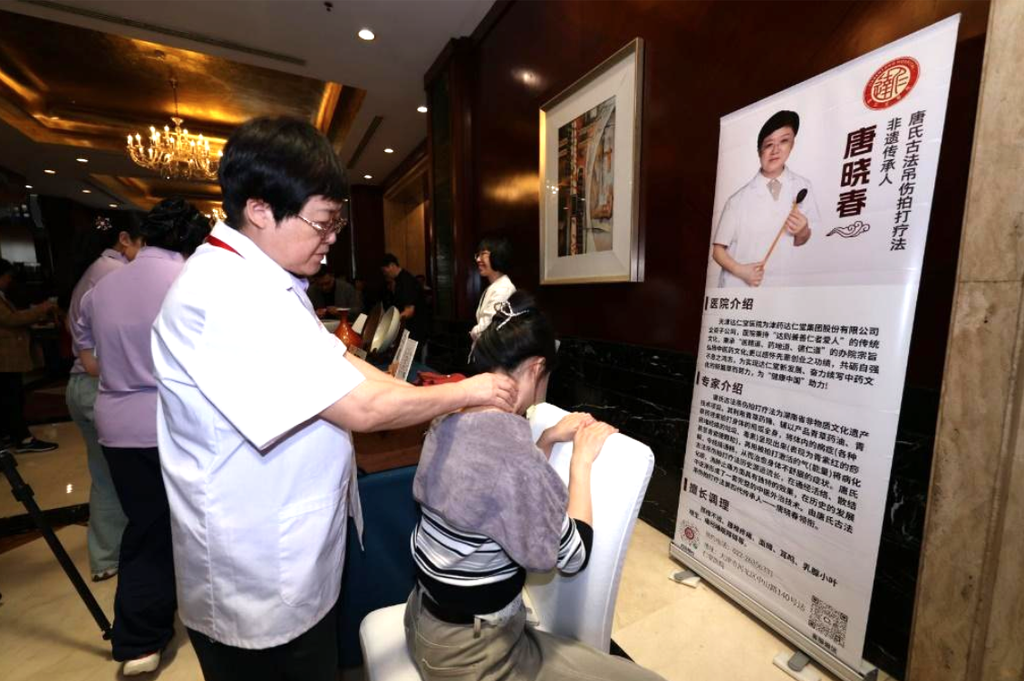
The forum titled “Luban Workshops: Practice and Exploration in the Global Expansion of Vocational Education” brought together representatives from Tianjin vocational colleges, overseas graduates, traditional Chinese medicine practitioners and overseas media. Discussions covered China-Africa and China-Pakistan vocational education cooperation, the experiences of international students, the overseas communication of traditional Chinese medicine, and how Chinese-language media can report on international vocational education cooperation.
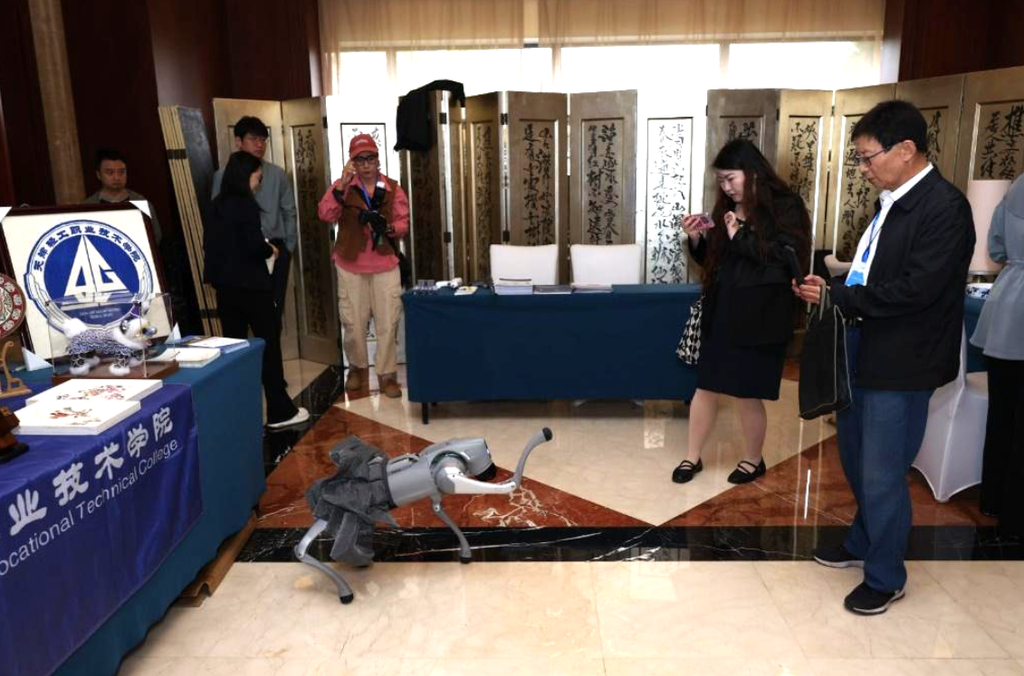
Another sub-forum, themed “Open Ground, Connecting New Global Opportunities,” featured representatives from companies including Yunsheng Intelligence, Reach Surgical, Wybotics, UBTECH and Atomrobot. Participants discussed the transformation from traditional Chinese manufacturing to smart manufacturing, artificial intelligence applications, new quality productive forces and the overseas expansion of Chinese technology companies.
According to the forum schedule, participants travelled on October 15 to downtown Tianjin, the Tianjin Binhai New Area and Xiong’an New Area in Hebei for site visits, gaining further insight into urban development, industry, cultural projects and coordinated development across the Beijing-Tianjin-Hebei region.
Since its launch in 2015, the Overseas Chinese New Media Forum has developed into a platform for exchange and cooperation among overseas Chinese-language media. Guests at the previous six editions came from more than 100 countries and regions and represented around 300 overseas media organizations.
As global media consumption continues to change and social platforms play an increasingly influential role, this year’s forum also focused on how new media can be used to connect with overseas audiences, improve content localization, and enable overseas Chinese-language media to participate in the international communication efforts of Chinese companies.
(LJI by Yuanyuan)